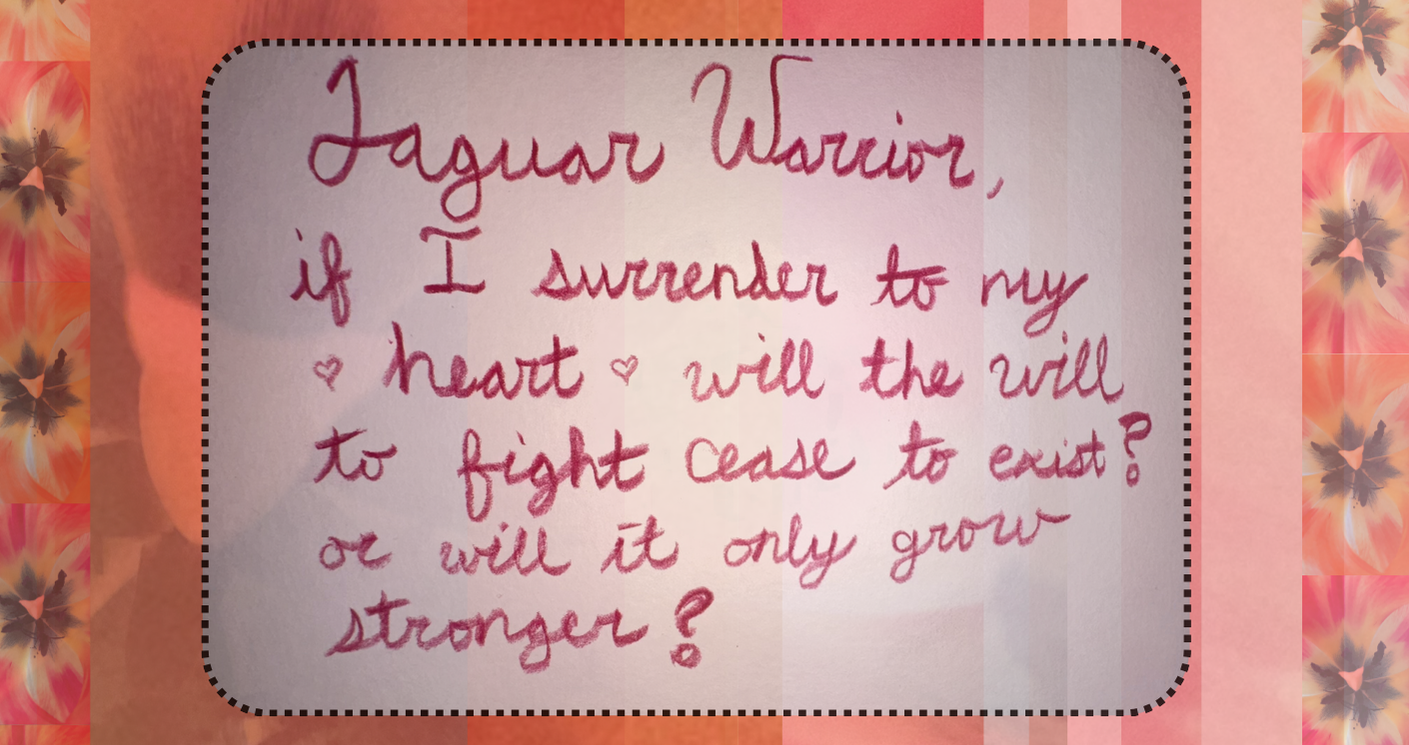
Jaguar Warrior, if I surrender to my heart will the will to fight cease to exist?
...or will it only grow stronger?
We are a reader-supported publication!
Subscribe to join the community, receive new posts, and co-create this space.
Since taking on a new professional role focused on community empowerment and Indigenous food sovereignty, I have found it difficult to make time to engage with you all, INDIGENEXUS, and the space I wish to tend here as I share my creative work with you all via this newsletter. Fortunately, that doesn't mean the flow of inspiration stopped.
In fact, my heart has been energized lately by the many opportunities now available to express itself after a long period of silence–a necessary pause to learn how to let my sovereignty be the only and true guiding authority of my life.
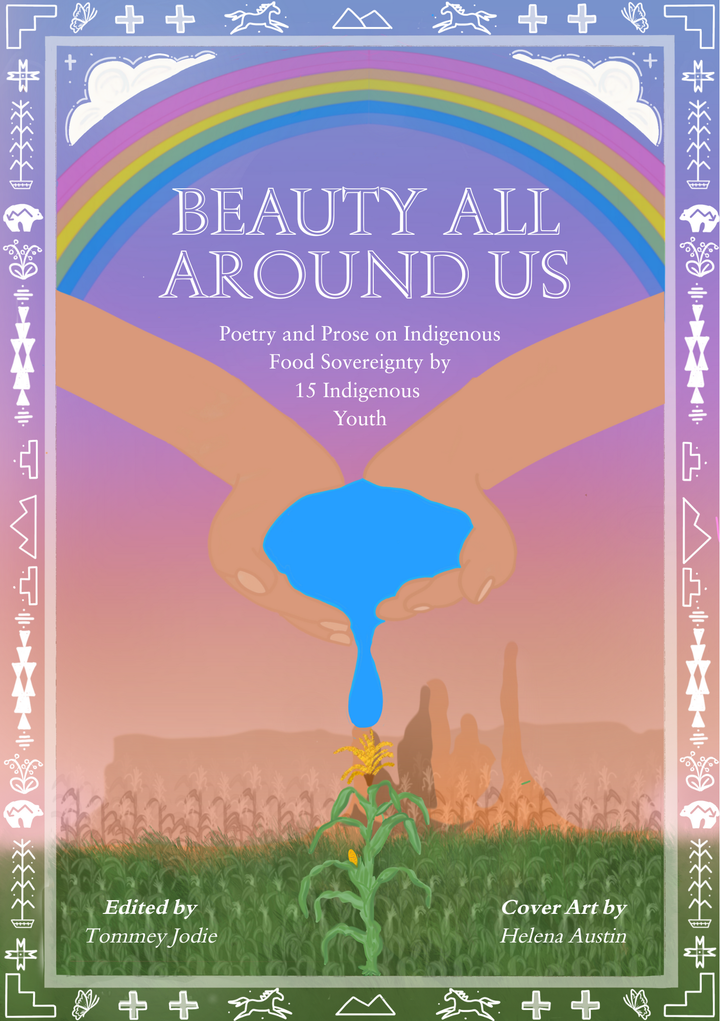
One opportunity I'd like to highlight at the moment is the Indigenous Climate Justice Zine, curated and edited by Tommey Jodie (Diné), a follow-up project to Beauty All Around Us.
Check out my poetry and prose "(de)Seeded" in Beauty All Around Us below...
 Marianna G. M. Cota, mph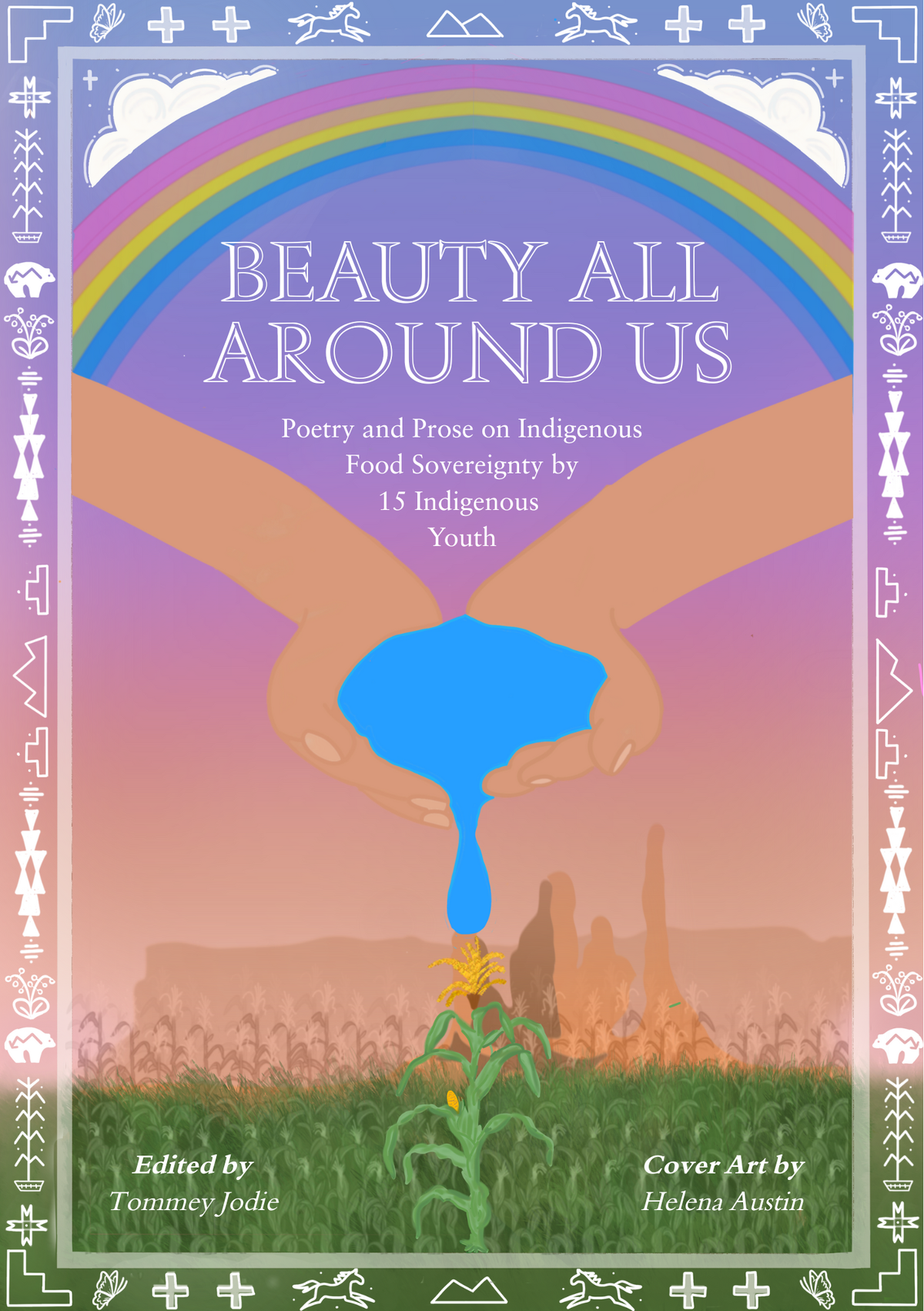
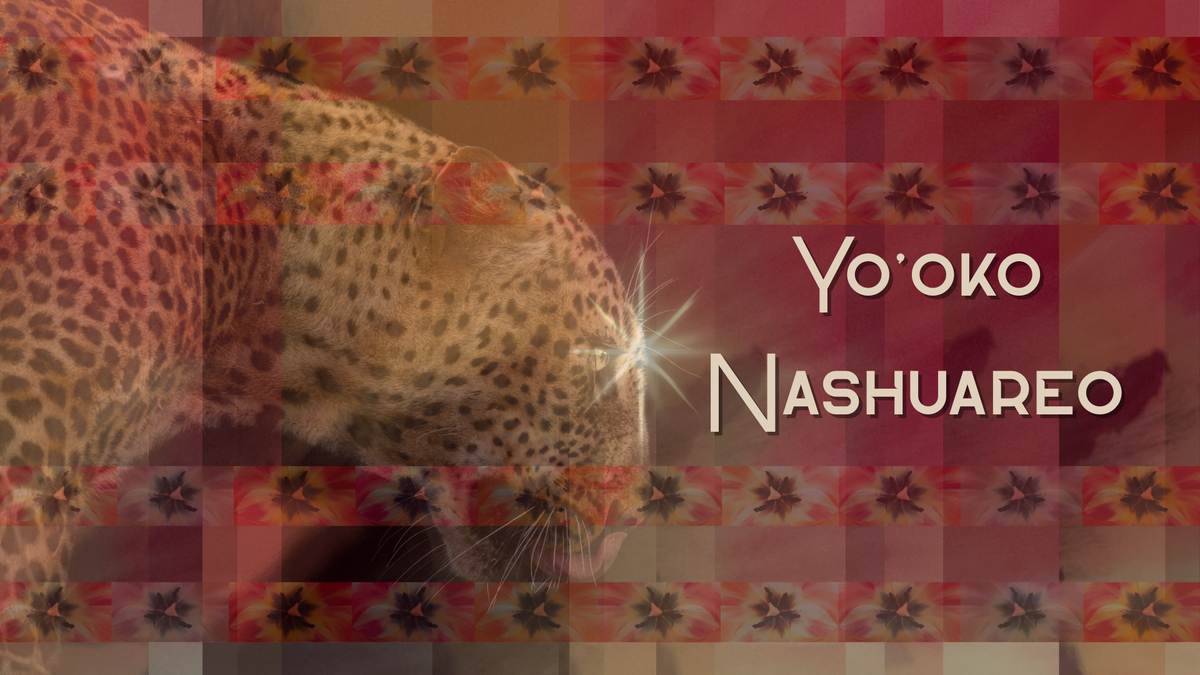
The following poem, "Yo'oko Nashuareo," will be featured alongside art, poetry, and prose by other Indigenous creatives in the Indigenous Climate Justice Zine.
Stay tuned for details on Physical Copies of the Indigenous Climate Justice Zine and FREE digital access through Abalone Mountain Press.
Co-create this space here on INDIGENEXUS with me by either connecting with others in the comments below or sharing this post!
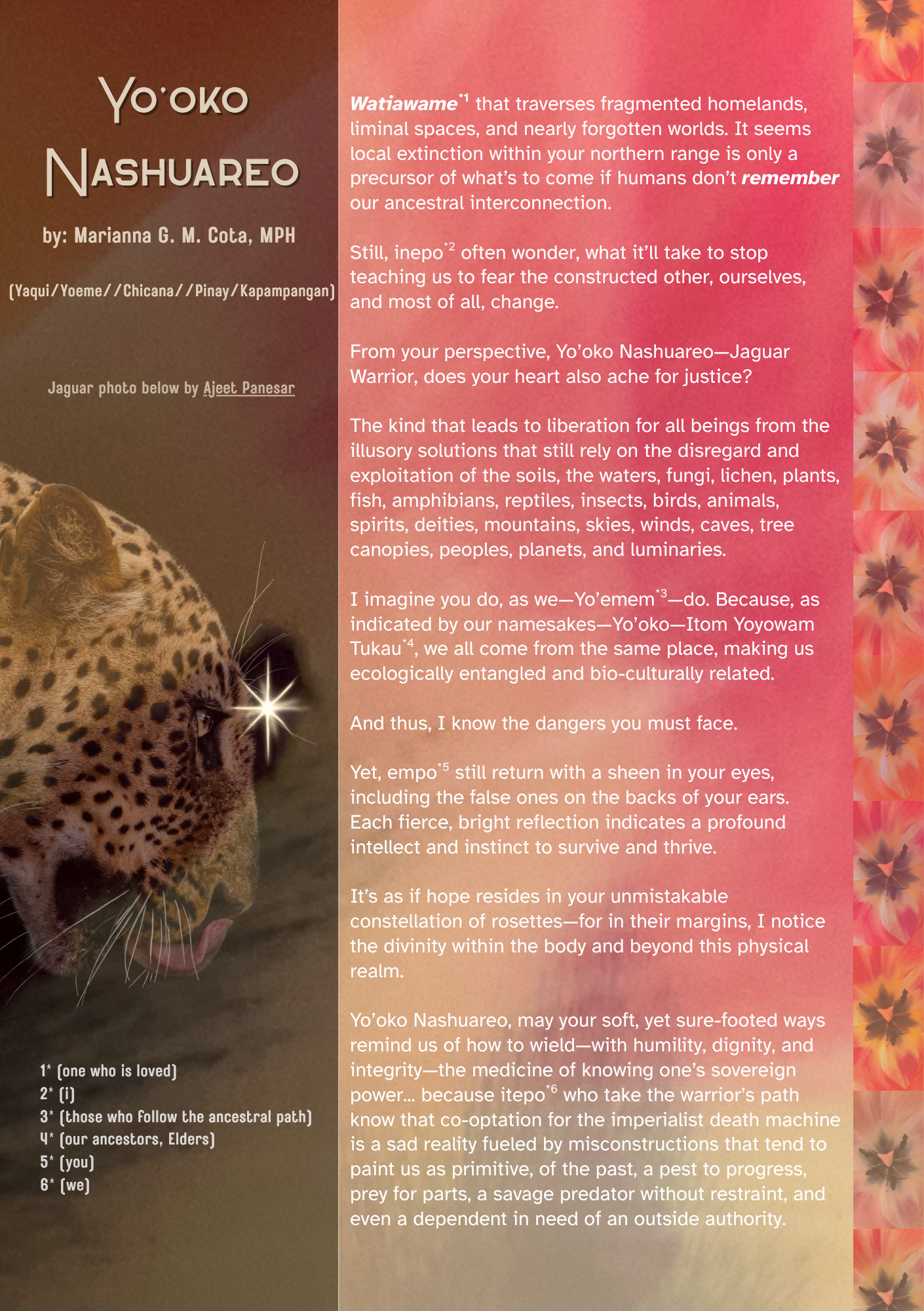
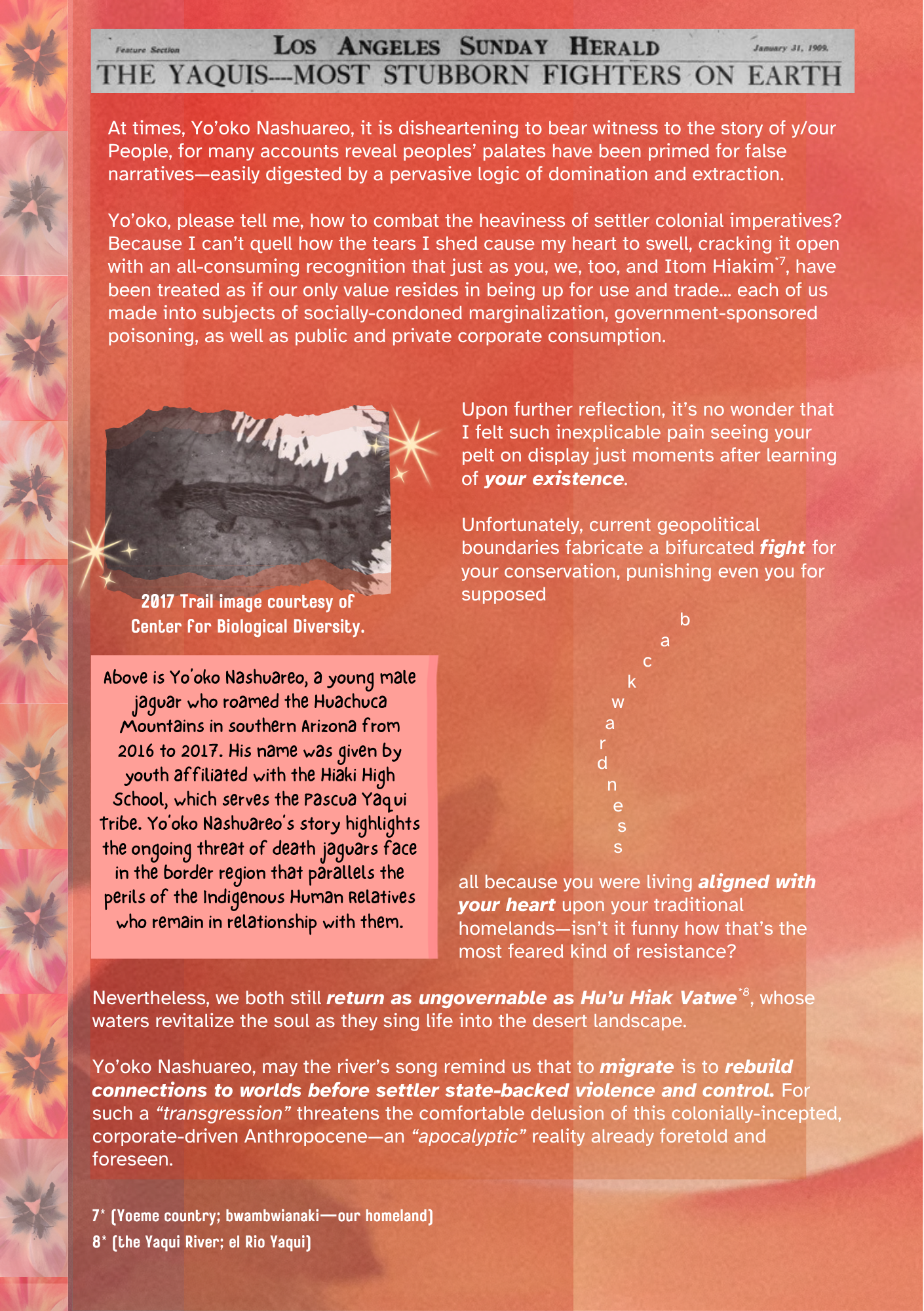
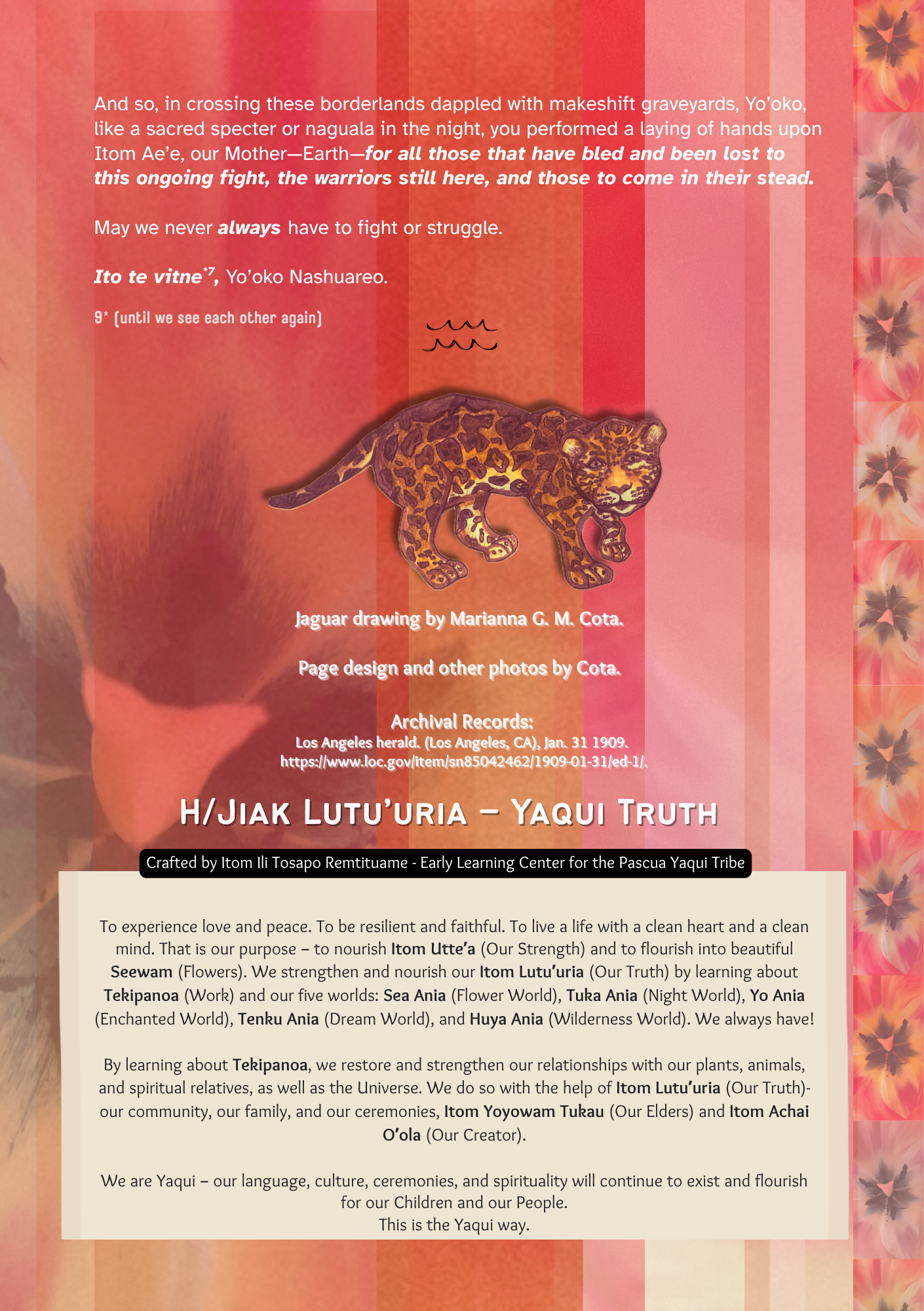
Author's Note:
Starting to write this piece during my luteal phase made a lot of sense because of the heightened sensitivity I was in and the cyclical nature in which ancestral trauma often surfaces to be processed and transformed.
Moreover, I felt that giving voice to this topic of climate justice and the story of Yo’oko required me to lean into an embodied writing process in which I surrendered to my heart and honored the ebb and flow of all the emotions, insights, and physical reactions in my being rather than fighting them.
Unsurprisingly, I found this act much like navigating bodies of water. A skill rooted in 1) respectful reverence toward the beings, processes, and conditions that sustain the cycles of Nature and the balance of Life/Death//Creation/Destruction and 2) the ability to recognize signs, respond to them, and surrender control as necessary; yet, take direction to prevent oneself from being consumed by the situation.
I imagine such navigation skills were taught and learned fairly early on in life by my ancestors from my maternal line, whose living descendants still reside in a province that derives its name from pampáng or panpáng, meaning riverbank; as well as the ancestors and descendants of my paternal line, whose livelihoods depend on the Hiak Vatwe—Rio Yaqui—Yaqui River.
In practice, this looks like re-centering traditional cultural practices in my life while de-centering capitalist and imperialist cultural norms, logic, and language that marginalize, dehumanize, and criminalize Indigenous Peoples and the defense of their livelihoods.
For me, a huge part of that work was releasing fear-based socioemotional conditioning that promotes emotional turmoil and hinders me from giving voice to my truth.
In my experience, such conditioning runs deep due to stuck energy from experiences lost from my memory, and even those not directly experienced by me. I imagine it is likely due to some epigenetic transfer of energy that allows the experiences and emotions of our ancestors, past, present, and emergent, to be felt in our body across time and space. Through such sensations, they provide us with context and insights into our lineage, within which resilience and wisdom can unfold over the course of our lives.
Intuitively, this energetic transfer makes sense, given studies indicating that water holds molecular–emotional–memory and the fact that we are beings whose bodies are mostly made of water that has been cycled on this Earth for millennia.
While I can only speak to my experience of emotionally and energetically tending to ancestral aches, it seems we could all benefit from sitting with the culturally situated truths that Indigenous Peoples possess and express through their livelihoods, relational ethics, and knowledge systems.
Nurturing Itom Lutu’uria to bloom through everyday acts of my life is hard work.
This work pushes me to see the universal threads that connect and sustain the more-than-human world(s) around us, all of which reveal themselves when you form healthy relationships with them and the global diaspora of Indigenous Peoples’ Kincentric–Earth-based worldviews, traditional practices, ceremonies, languages, teachings, ways of knowing, being, doing, relating, sustaining, and dreaming.
Respecting and reconnecting to this global repertoire of spatially, temporally, and culturally responsive “climate-smart” solutions is exactly what we collectively need to address the growing disproportionate impacts of climate change; not carbon credits, innocuous fines, and innovative, yet, ultimately, unethical, ill-distributed, and extractive industries, nor irrelevant concessions, manipulative rhetoric, and thinly veiled predatory policies under the guise of human rights.
with a stubborn heart full of awe, gratitude, and respect for this Huya Ania—Wilderness World,
mgmc ♡

Comments ()